KUALA LUMPUR: ISTIC Honorary Chairman Dato’ Ir. (Dr) Lee Yee Cheong Highlights Global Cooperation at UTAR ASEAN Public Lecture Series.
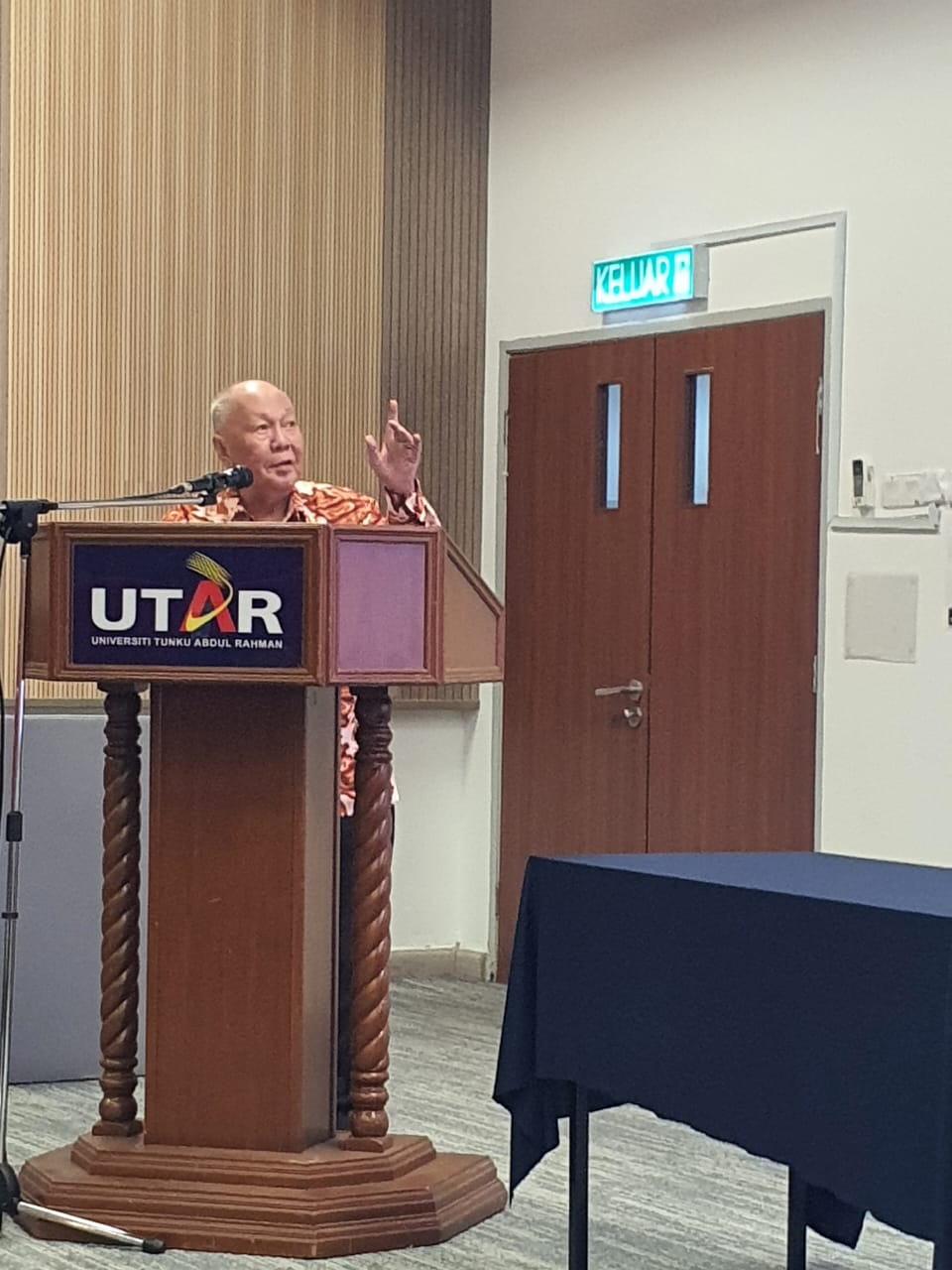
Universiti Tunku Abdul Rahman (UTAR), in collaboration with the ASEAN Research Centre for a Community of Shared Future (ACSF), hosted the ASEAN Public Lecture Series on 22 July 2026 (Wednesday) at UTAR’s Kuala Lumpur Campus.
The lecture featured Academician Dato’ Ir. (Dr) Lee Yee Cheong, Honorary Chairman of UNESCO’s International Science, Technology and Innovation Centre for South-South Cooperation (ISTIC) and Malaysia Honorary President of the Academy of Engineering and Technology of the Developing World (AETDEW), who delivered a lecture titled “The Global Development Initiative, the Global Security Initiative, the Global Civilization Initiative, and the Global Governance Initiative.”
During the session, Dato’ Ir. (Dr) Lee Yee Cheong shared insights on the importance of strengthening international cooperation to address global challenges through sustainable development, peace, cultural understanding, and inclusive governance. Drawing from his extensive experience in science, technology, innovation, and international collaboration, he highlighted the need to translate global visions into practical actions that deliver meaningful benefits to communities.
A key focus of the lecture was the Global Development Initiative (GDI), which emphasises poverty eradication, equitable development, and shared prosperity through innovation, education, and community participation. Dato’ Ir. (Dr) Lee Yee Cheong highlighted the importance of rural revitalisation initiatives that empower local communities by engaging young professionals to apply their knowledge and expertise in areas such as agriculture, cultural development, and tourism.
The lecture also highlighted on the Malaysia New Villages Project by UTAR, particularly the village twinning initiative between Beigou Village in Beijing and Triang New Village in Pahang. The initiative has facilitated cultural exchange, rural revitalisation, and community based tourism, demonstrating how South-South cooperation can create meaningful impact at the grassroots level. A reciprocal visit by representatives from Beigou Village to Malaysia is planned for autumn 2026 to further strengthen community partnerships and knowledge exchange.
In addressing the Global Security Initiative (GSI), Dato’ Ir. (Dr) Lee Yee Cheong underscored that peace, mutual trust, and dialogue are fundamental to achieving sustainable development. He further discussed the Global Civilization Initiative (GCI), emphasising the importance of respecting cultural diversity and promoting exchanges among civilisations to foster greater understanding and cooperation.
On the Global Governance Initiative (GGI), he highlighted the importance of inclusive governance involving governments, academia, industry, and local communities. He noted that addressing increasingly complex global challenges requires collective efforts and collaboration among diverse stakeholders to develop effective and sustainable solutions.
The lecture also showcased advancements in science, technology, and innovation across sectors including renewable energy, infrastructure, aerospace, and digital technologies. These examples demonstrated the role of scientific collaboration and knowledge sharing in strengthening resilience and accelerating sustainable development.
Reflecting ISTIC’s role as a UNESCO Category 2 Centre, Dato’ Ir. (Dr) Lee Yee Cheong reaffirmed the Centre’s commitment to promoting South-South and triangular cooperation through capacity building, knowledge exchange, and international partnerships. He highlighted that initiatives such as the Malaysia China village twinning project demonstrate how science, innovation, and community engagement can be transformed into practical cooperation with lasting impact.
The ASEAN Public Lecture Series concluded with a call for ASEAN countries and international partners to deepen collaboration at both policy and community levels. Dato’ Ir. (Dr) Lee Yee Cheong emphasised that stronger partnerships, mutual learning, and science driven cooperation are essential in building a more inclusive, resilient, and sustainable future.